
Matrugaya Pooja
Matrugaya Puja from Uttar Pradesh
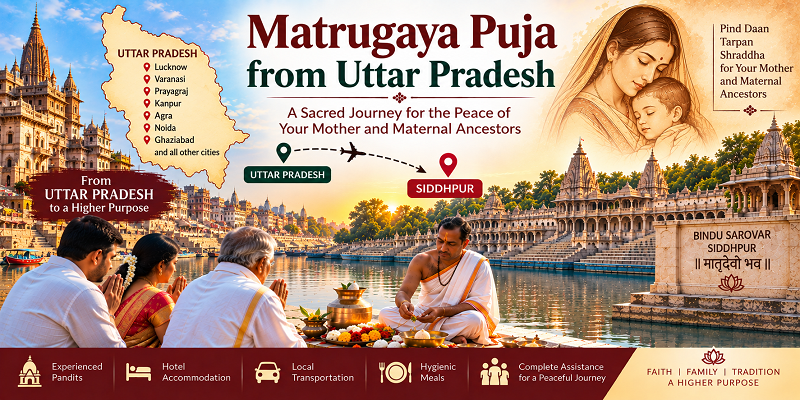
Devotees travelling from Uttar Pradesh can perform the sacred Matrugaya Puja in Siddhpur, Gujarat, with proper Vedic rituals and complete guidance. Siddhpur is a revered pilgrimage destination known for Matrugaya Pind Daan, Shraddha and Tarpan rituals dedicated especially to one’s mother and maternal ancestors. These sacred rituals are traditionally performed at the holy Bindu Sarovar under the guidance of experienced and knowledgeable pandits. Families travelling from Lucknow, Varanasi, Prayagraj, Kanpur, Agra, Noida, Ghaziabad and other cities of Uttar Pradesh can plan their Matrugaya Puja according to their preferred date. Our team assists devotees with puja scheduling, experienced pandits, puja samagri and other essential arrangements required for performing the rituals. Proper guidance is provided throughout the puja so that devotees can understand and complete every ritual in a peaceful and organized manner. Assistance for comfortable hotel accommodation, hygienic meals and local transportation can also be arranged during the stay in Siddhpur. Devotees can perform Matrugaya Pind Daan, Matru Tarpan, Shraddha Karma and other ancestral rituals according to their family traditions and requirements. From planning the journey to completing the sacred rituals at Bindu Sarovar, our team provides complete assistance for a smooth and meaningful spiritual experience. If you are planning Matrugaya Puja from Uttar Pradesh, you can arrange your visit to Siddhpur in advance and perform the sacred rituals with proper guidance, devotion and peace of mind.
Frequently Asked Questions
1. What is Matru Gaya in Siddhpur?
Matru Gaya, located in Siddhpur, Gujarat, is a sacred Hindu pilgrimage place traditionally associated with performing Shraddh, Pind Daan and other ancestral rituals for one’s mother and maternal ancestors. Siddhpur is widely known as Matru Gaya and holds a special place in Hindu religious tradition.
2. Why is Siddhpur called Matru Gaya?
Siddhpur is traditionally regarded as Matru Gaya, a sacred place associated especially with rituals performed in remembrance of one’s mother. According to Hindu tradition, performing Shraddh and Pind Daan here is considered a sacred way of expressing gratitude and reverence towards one’s mother.
3. What is the history of Matru Gaya Siddhpur?
Siddhpur has an ancient religious history and is associated with Lord Kapila Muni and the sacred Bindu Sarovar. The town has been an important pilgrimage centre for centuries, particularly for rituals connected with the mother and maternal ancestors.
The religious significance of Siddhpur is closely connected with the belief that performing Shraddh and Pind Daan here provides an opportunity to remember, honour and express gratitude towards the departed mother and family elders.
4. Why is Matru Gaya also known as Nabhi Gaya?
Matru Gaya is also traditionally referred to as Nabhi Gaya. According to the religious belief, a mother and child are connected through the umbilical cord (navel) before birth. Because of this sacred connection between mother and child, Siddhpur’s Matru Gaya is traditionally associated with the concept of Nabhi Gaya.
5. Who can perform Matru Gaya Shraddh and Pind Daan?
Matru Gaya Shraddh and Pind Daan can be performed for one’s mother, grandmother (Dadi), maternal grandmother (Nani), and other respected female ancestors, according to the family’s religious tradition.
The ritual is a way to express respect, gratitude and remembrance towards the departed mother and elders.
6. Can women perform Matru Gaya Shraddh and Pind Daan?
Yes. Women can also perform Matru Gaya Shraddh and Pind Daan.
At Matru Gaya, both women and men may have the religious right to perform the rituals according to the applicable tradition and family circumstances. A daughter, wife or another eligible female family member may perform the ritual when appropriate.
7. Can a daughter perform Matru Gaya Pind Daan for her mother?
Yes. A daughter can perform Matru Gaya Shraddh and Pind Daan for her mother, according to the applicable Hindu religious tradition. The ritual provides an opportunity for a daughter to express her love, gratitude and remembrance towards her mother.
8. Can a son perform Matru Gaya Shraddh for his mother?
Yes. A son can perform Matru Gaya Shraddh and Pind Daan for his mother. This is one of the traditional purposes associated with Matru Gaya in Siddhpur.
9. Can Matru Gaya Pind Daan be performed for a grandmother (Dadi)?
Yes. Shraddh and Pind Daan may be performed in remembrance of a grandmother (Dadi) according to the family’s religious tradition and the guidance of the priest conducting the ritual.
10. Can Matru Gaya Pind Daan be performed for a maternal grandmother (Nani)?
Yes. Matru Gaya rituals can also be performed in remembrance of a maternal grandmother (Nani). The exact ritual and Sankalp can be determined according to the family’s circumstances and religious tradition.
11. Can both men and women perform Matru Gaya Pind Daan?
Yes. Both men and women have a place in the religious tradition of Matru Gaya rituals. The appropriate person for performing the Sankalp and Pind Daan can be determined according to the family circumstances and the guidance of the priest.
12. What is Bindu Sarovar in Siddhpur?
Bindu Sarovar is one of the most sacred pilgrimage sites in Siddhpur. It is traditionally associated with Lord Kapila Muni and is an important part of Siddhpur’s religious identity.
13. Why is Bindu Sarovar called Bindu Sarovar?
According to a traditional religious belief, tears of happiness (Harsh Bindu) fell from the eyes of Lord Kapila Muni. These sacred drops are associated with the origin of the holy Bindu Sarovar.
The expression “Harsh Bindu” refers to a joyful or happy tear, and therefore the sacred place is traditionally associated with the name Bindu Sarovar.
14. What does “Harsh Bindu” mean?
“Harsh Bindu” can be understood as a drop of happiness or a tear of joy. According to the traditional story associated with Siddhpur, the sacred Bindu Sarovar is connected with the joyful tears of Lord Kapila Muni.
15. What rituals are performed at Matru Gaya?
Depending on the family’s requirements and religious tradition, rituals may include:
– Sankalp
– Pind Daan
– Shraddh
– Tarpan
– Offerings in remembrance of the departed
– Other traditional Vedic rituals associated with Matru Gaya
The exact procedure may vary according to the family and the guidance of the priest.
16. Why do people come to Siddhpur for Matru Gaya Shraddh?
Devotees come to Siddhpur because Matru Gaya is traditionally considered a sacred pilgrimage place for performing rituals in remembrance of the mother. Many people visit Siddhpur to fulfil their religious responsibilities and express gratitude towards their departed mother and female elders of the family.
17. Can people from other states of India perform Matru Gaya Pind Daan?
Yes. Devotees from Gujarat and other parts of India can come to Siddhpur to perform Matru Gaya Shraddh and Pind Daan. Families travelling from distant cities or states can contact the priest in advance for information about the ritual, timing and arrangements.
18. Can people from South India perform Matru Gaya Shraddh?
Yes. Devotees from South India and other parts of India can perform Matru Gaya Shraddh and Pind Daan at Siddhpur. Proper guidance regarding the ritual and arrangements can be provided before their visit.
19. What should I bring for Matru Gaya Pind Daan?
The required Puja Samagri depends on the specific ritual being performed. Devotees can contact the priest in advance to know what is required and whether the necessary Puja materials can be arranged at Siddhpur.
20. Do I need to book Matru Gaya Puja in advance?
It is recommended to contact the priest in advance and confirm the date, time, ritual requirements and arrangements, especially if you are travelling to Siddhpur from another city or state.
21. How long does Matru Gaya Shraddh take?
The duration depends on the type of ritual and the family’s requirements. Before the Puja begins, the priest can explain the procedure and approximate time required.
22. What is the significance of Matru Gaya Shraddh?
Matru Gaya Shraddh is traditionally considered an expression of respect, gratitude, remembrance and devotion towards one’s mother and departed female elders. It gives devotees an opportunity to honour the person who gave them life and remember the family’s ancestors.
23. Why is the mother given special importance in Matru Gaya?
The mother has a unique place in Hindu tradition because of the physical and emotional relationship between mother and child. The child develops in the mother’s womb and is connected to her through the umbilical cord. This sacred relationship is one of the reasons Siddhpur’s Matru Gaya is traditionally associated with the mother and is also connected with the name Nabhi Gaya.
24. Is Matru Gaya only for men?
No. Matru Gaya is not exclusively for men. Women can also participate in and perform the appropriate Shraddh and Pind Daan rituals. The eligibility and exact procedure may depend on the family situation and the religious tradition being followed.
25. What makes Matru Gaya Siddhpur spiritually important?
The combination of Matru Gaya, Bindu Sarovar, Lord Kapila Muni’s association, Shraddh traditions and the sacred mother-child relationship makes Siddhpur an important Hindu pilgrimage destination for devotees wishing to honour their departed mother and female ancestors.
26. How can I arrange Matru Gaya Puja in Siddhpur?
If you are planning to visit Siddhpur for Matru Gaya Shraddh or Pind Daan, you can contact us in advance. We can guide you regarding the Puja procedure, suitable date and time, required materials, location and other arrangements.
27. Can I contact you before travelling to Siddhpur?
Yes. We recommend contacting us before your journey so that the Puja can be planned properly according to your family’s requirements and travel schedule.