
Matrugaya Pooja
Matrugaya Siddhpur, located in Gujarat, is one of the most sacred pilgrimage places in Hindu religion for performing rituals dedicated to mothers and ancestors. Siddhpur is especially famous for Matrugaya Pind Daan, a sacred ritual performed for the peace, blessings and moksha of a mother’s soul after her death. According to Hindu beliefs and ancient scriptures, Siddhpur holds a unique spiritual importance because it is considered the holy place where devotees can perform rituals specifically for their mothers.
History of Matrugaya Pooja in Siddhpur, Gujarat
Siddhpur is famous for Matrugaya, a sacred place associated with ancient Hindu traditions and rituals performed for mothers and ancestors. The history of Matrugaya dates back thousands of years. According to Hindu scriptures, when Lord Brahma created the universe, the first beings born from his mind were called “Manas Putra.” Among them, Sage Kardam Rishi was one of the earliest sages created by Lord Brahma.
Kardam Rishi performed intense penance at this holy place for 10,000 years to please Lord Vishnu. Pleased by his devotion, Lord Vishnu appeared before him and offered him a boon. Kardam Rishi humbly replied that he desired nothing except liberation and the blessing of the Lord. Lord Vishnu then told him that he would first marry Devahuti, the daughter of King Manu, and later Lord Vishnu Himself would take birth in their family as Kapil Muni, His fifth incarnation.
After the marriage of Kardam Rishi and Mother Devahuti, they were blessed with nine daughters, who were later married to great sages. However, Mother Devahuti once asked Kardam Rishi about Lord Vishnu’s promise to take birth in their family. Kardam Rishi again worshipped Lord Vishnu, and Lord Narayan appeared before them. Mother Devahuti asked for no material blessings and only prayed for the Lord to fulfill His promise. Lord Vishnu blessed her, and later Lord Kapil Muni was born.
When Kapil Muni was around five years old, He began teaching Sankhya philosophy and spiritual knowledge to His mother, Devahuti. During this divine conversation, Mother Devahuti attained spiritual realization and liberation. At that moment, she requested Lord Kapil Muni to bless not only her, but all women and mothers of the world.
Lord Kapil Muni then declared that anyone who wishes to become free from Matru Rin (the debt towards one’s mother) should come to this sacred land and perform Pind Daan in the name of their mother, grandmother or ancestors. By performing these rituals, devotees would attain blessings, peace and liberation for their ancestors and freedom from maternal debt.
After this divine event, Lord Parshuram became the first person to perform Pind Daan at Siddhpur for his mother, Mata Renuka, to free himself from the sin and debt connected to his mother. Since then, millions of devotees from all over India have been visiting Siddhpur to perform Matrugaya Pind Daan rituals for the peace and moksha of their mothers’ souls.
Hindu scriptures mention three sacred “Gaya” pilgrimage places. The first is Gaya in Bihar, dedicated to rituals for fathers and paternal ancestors. The second is Siddhpur in Gujarat, known as Matrugaya, dedicated to mothers. The third is Brahma Kapaleshwar near Badrinath. Siddhpur is especially important because it is believed that by performing Matrugaya Pind Daan here, devotees become free from the spiritual debt of their mother and help their mother’s soul attain peace and liberation.
Siddhpur is also home to the sacred Harsh Bindu Sarovar, believed to have been formed from the tears of joy that fell from the eyes of Lord Kapil Muni. This holy sarovar remains one of the most important spiritual places for performing Matrugaya rituals and Pind Daan ceremonies even today.
Terms & Conditions
Pooja Timing
Matrugaya Pooja can be performed anytime between sunrise and sunset as per the scheduled muhurat and pandit availability.
Duration of Pooja
The complete pooja ritual usually takes approximately 2 hours depending on the ritual process and spiritual procedures.
Dress Code & Purity
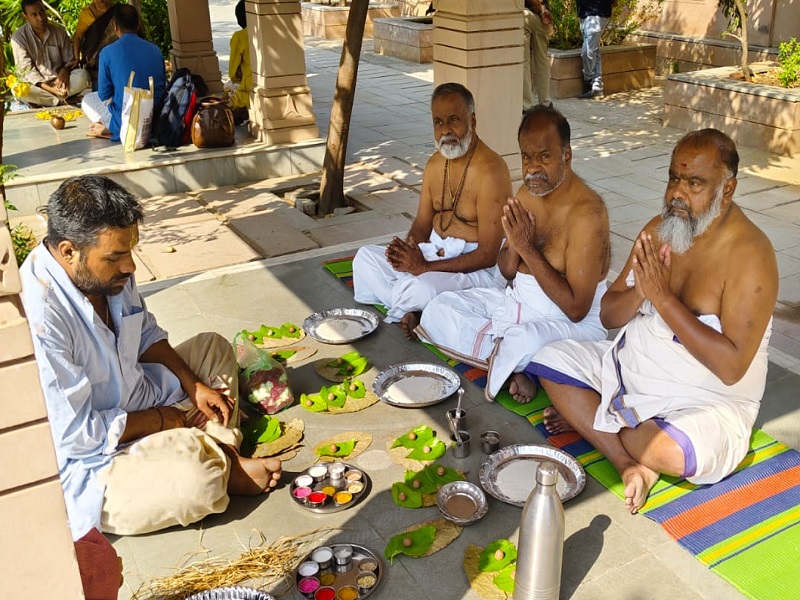
Before participating in the pooja, devotees are requested to take a proper bath and maintain physical purity. Traditional light-colored or white clothes and dhoti are recommended while sitting for the pooja rituals.
Empty Stomach Requirement
The pooja is generally performed on an empty stomach. Devotees are advised to follow the guidance provided by the pandit before attending the ritual.
Follow Brahmacharya
Devotees participating in the pooja are requested to maintain brahmacharya (spiritual discipline and purity) throughout the day of the ritual.
Maintain Peaceful Conduct
On the day of the pooja, devotees should avoid anger, arguments, negative thoughts or aggressive behavior and maintain a calm, peaceful and spiritual mindset during the rituals.